

Serhat Toptancı // Allianz Türkiye - Agile Office Leader
The great author Ursula K. Le Guin says, “The only thing that makes life possible is permanent, intolerable uncertainty: not knowing what comes next.”
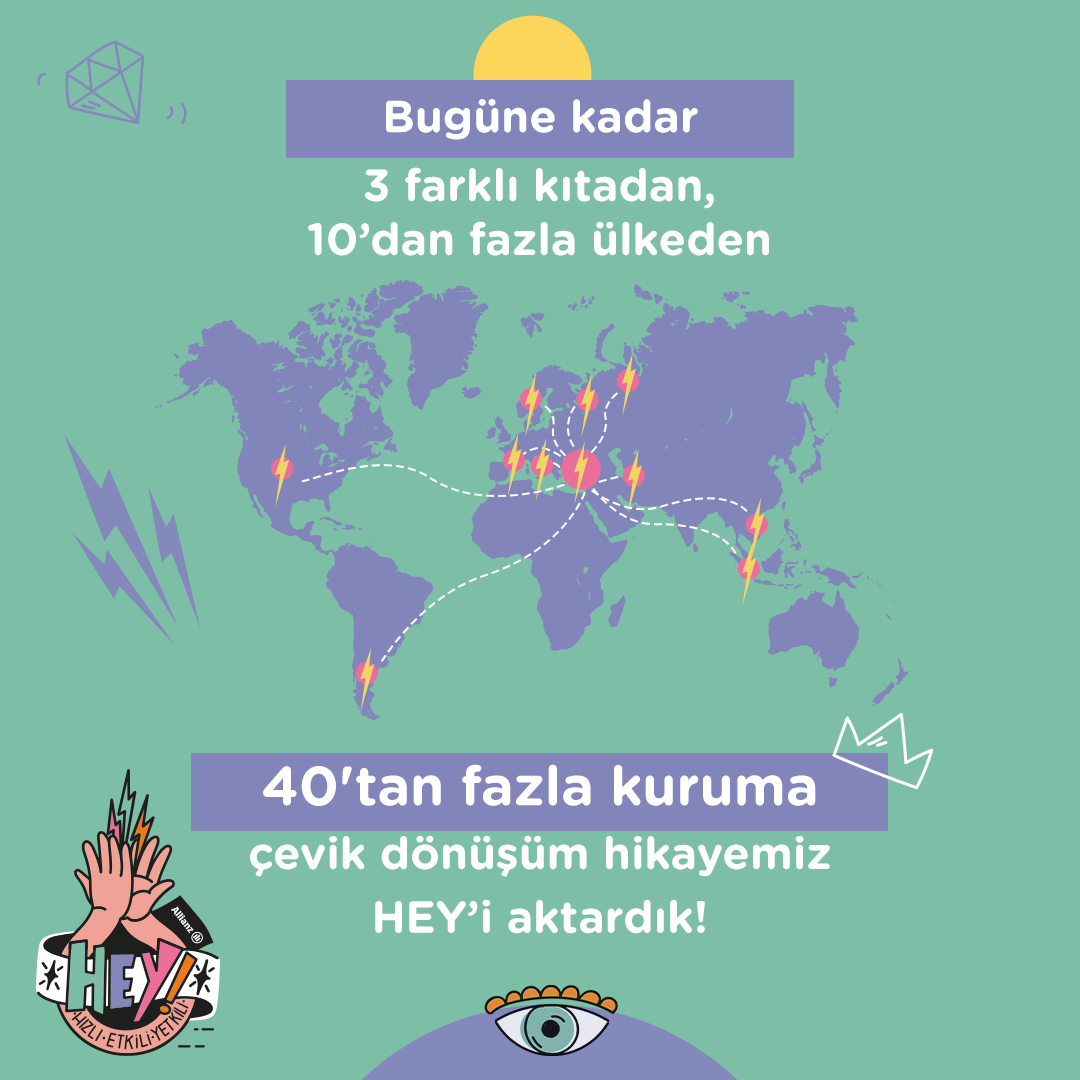
As Allianz Turkey, we hosted more than 40 domestic and multinational companies from different industries, who knocked on our door and wanted to learn about our agile transformation journey HEY!, all while living in a state of uncertainty because of COVID-19.
Our meetings with most of them were not limited to one time. We had our second, third and even fourth meetings. Most of the meetings were attended by the CEOs, CHROs, COOs and CIOs of the corporations, especially with their leaders.
In these sharing sessions, where we tried to understand each other and cover different views, we saw how similar our agendas are, no matter where we are from in the world, and how we try to find answers to the same questions even though we are in different sectors. Moreover, since we were advancing an intense transformation agenda, each post was a new question, a new lesson and a new perspective.
These meetings have been very beneficial for us in terms of looking at where we are as a team and seeing our maturity level.
So, what were the most common questions and how did we answer them? Let's see together...
Are Agile Organizations Beneficial? In which area do you see the greatest benefit?
First of all, it is necessary to set the expectation well. As the Allianz Turkey team, meeting on the common agenda regarding the goals we wanted to reach since the beginning of this journey, where we took the first step in 2018, made it easier for us to internalize the transformation and embrace it as an organization.
What did we achieve with this transformation in the first stage;
We see that we are accelerating. Autonomous, multifunctional teams can make rapid decisions and focus on opportunities.
The fact that software resources and those working in the business family are on the same team has been beneficial in creating value and rapid developments for the customer.
A common language is forming between our software teams and the business family with each passing day, and speaking the same language becomes increasingly important, especially as the pace of technological transformation increases.
Thanks to Scrum, a structure is possible in which the team can see the backlog transparently, act together to complete the work, clearly evaluate success and failure, and give feedback.
We have radically transformed our performance appraisal mechanism. With the POCLAC Committee composed of POs, CLs and ACs, we can evaluate the performance of the whole team with broad participation.
The fact that our Tribe Leaders are members of the executive board has been very beneficial, especially in terms of transferring the company strategy to the teams and bringing all the teams together in a common vision in the big picture. In each sprint, our teams met TLs in their reviews and received their first-hand feedback.
What challenges have arisen in the transformation process? What would you do differently in this transformation?
Difficulty exists at every step of the process. Every change requires leaving the comfort zone and discovering innovations. This discovery carries risks. You can internalize the risks by trying and sometimes failing.
Nothing on paper works in real life. But we don't define it as a challenge, we see it as a "Lesson." Therefore, it is essential to try, fail and try again.
Some of these lessons
- We thought it would be enough to give the trainings a few times. Afterwards, we decided to extend the training process on agile transformation to a long period with a master program. With Allianz Turkey Academy (ATA), we have not only shaped the training content according to our needs, but also designed a structural development program. We have transformed these trainings into a structure that our experienced Agile Coaches who know corporate culture can give as much as possible.
- Likewise, communication was a smoother step since we focused more on design and editing in our first pilot study. In the subsequent evaluation, we created a more frequent, holistic and inclusive communication plan. This evolved over time and turned into HEY!.
- We realized the importance of our synchronization needs, which we did not plan at the beginning, and we added the rituals that will ensure alignment with the main stakeholders of the Tribes we have established.
How important is the Agile Coach? How many Agile Coaches should there be, is there a golden ratio?
The Agile Coach role is a critical one in this transformation. In the journey that we started with external Agile Coaches at the beginning of the transformation, we progressed with internal Agile Coaches.
One of the most critical points in advancing the process successfully is the creation of our internal Agile coaching staff with our highly experienced friends who have worked in different leadership roles in the organization for many years. It is critical for transformation to have an Agile Coach, who can be trusted by the employees involved in the transformation process, to step outside their comfort zone, try different opportunities and feel safe, who guides them when they get stuck, and removes obstacles. We can say that we have a great team in this regard.
When we evaluate the pros and cons, our golden ratio can be called 1 Agile Coach for an average of 7-8 squads, at least for today.
Why is this process progressing under the leadership of Human Resources?
Because all this is a transformation process that puts people at its center and progresses by constantly learning. In order for the structure to work effectively, the corporate culture and the organizational structure you have established must work in harmony. There is only one function that can make all this change by considering its employees, organization and corporate culture: Human Resources. Leave the cockpit to the HR people and watch how they work wonders.
What should be the first step? Where to begin?
First of all, prepare a blueprint* as an organization and determine your north star. Afterwards, it will be beneficial to listen to companies that have undergone this journey, experienced and will inspire you, especially with your leaders who will implement the change agenda.
We are waiting for you if you pass by.
*Blueprint: Detailed draft plan.
P.S. You can contact us by clicking here to share your experiences and ask questions about the agile working method.



Comments